A whiter smile rarely happens by accident. Choosing professional teeth whitening in London, ON puts a trained clinical team in charge of the shade, the safety, and the aftercare. At Clarke Dental Care on Clarke Road, whitening starts with an honest look at your teeth and gums, so you know exactly what to expect before, during, and after the appointment. This guide walks you through each step, sets clear recovery expectations, and helps you feel genuinely in control of the process.
What Professional Teeth Whitening Actually Involves
Professional teeth whitening uses concentrated, dentist-grade bleaching agents to lift stains from tooth enamel. Consequently, it works faster and more evenly than most drugstore strips. However, the real advantage is supervision. Before any gel touches your teeth, your dentist confirms the discoloration is a good candidate for whitening rather than a sign of decay, an old filling, or gum trouble.
Specifically, the team checks for cavities, cracks, and gum inflammation. Additionally, they note any existing crowns, veneers, or bonding, because those restorations will not change colour the way natural enamel does. This screening protects your results and prevents surprises later.
In-Office Versus Custom Take-Home Whitening
Clarke Dental Care offers two main paths. First, in-office whitening delivers noticeable brightening in a single visit while your gums stay protected. Second, a custom take-home kit uses trays molded to your teeth, letting you whiten gradually at home over several days. Furthermore, some patients combine both for a strong start followed by gentle maintenance.
Both options rely on the same principle, yet they suit different schedules and comfort levels. Therefore, your dentist will recommend the approach that matches your sensitivity, your timeline, and the depth of your staining.
Step-by-Step: Your Whitening Appointment
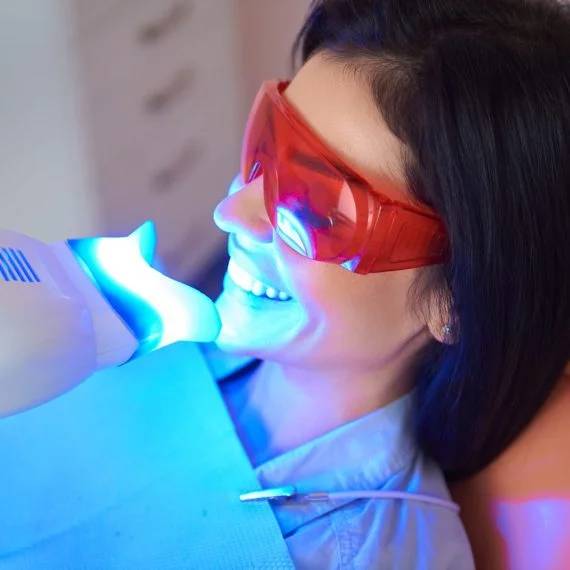
Clarity reduces anxiety, so here is how a typical professional whitening visit unfolds. First, the team records your current tooth shade as a baseline. Next, they gently clean the surfaces to remove plaque that could block the gel. Then, a protective barrier is placed along the gumline to shield soft tissue.
After that, the whitening agent is applied to the front teeth in careful layers. Meanwhile, your comfort is monitored throughout, and the gel is refreshed or removed on schedule. Finally, the barrier comes off, your teeth are rinsed, and your new shade is compared against the baseline. Consequently, you leave with a clear, measurable result rather than a guess.
Recovery Expectations After Teeth Whitening
Recovery from professional whitening is usually mild and short. Most patients experience temporary tooth sensitivity, especially to cold, for roughly 24 to 48 hours. However, this fades on its own, and a desensitizing toothpaste often helps. Additionally, your gums may feel slightly tender if any gel contacted them, though this settles quickly.
To protect fresh results, avoid deeply pigmented foods and drinks for the first day or two. Specifically, coffee, red wine, tea, and dark sauces can re-stain porous enamel while it rehydrates. Furthermore, skipping tobacco during this window makes a real difference. Your dentist will give you specific guidance based on the whitening method you chose.
How Long Do Whitening Results Last?
Results vary, yet many patients enjoy a brighter smile for one to three years. Naturally, your habits matter most. Consequently, drinking staining beverages through a straw, brushing twice daily, and keeping regular cleanings all extend the effect. Occasional touch-up trays can refresh the shade without repeating a full treatment.
Is Professional Whitening Safe and Right for You?
According to the Canadian Dental Association, whitening is safest when a dental professional evaluates your mouth first and supervises the process. Based on standards upheld by the Royal College of Dental Surgeons of Ontario, that oversight helps confirm your enamel, restorations, and gum health can handle the treatment. Therefore, an exam is never a formality; it is what makes whitening both effective and predictable.
Whitening suits many adults, but it is not for everyone. For instance, patients with untreated decay, active gum disease, or numerous front-tooth restorations may need other cosmetic options first. In those cases, the team at Clarke Dental Care can discuss alternatives from their broader menu of cosmetic and restorative services, such as veneers or cosmetic bonding, to reach your goal.
Frequently Asked Questions
Does professional teeth whitening hurt?
No, the procedure itself is not painful. However, some patients feel temporary cold sensitivity afterward. This typically eases within a day or two, and desensitizing products help considerably.
How white will my teeth get?
Results depend on your starting shade and the type of staining. Generally, professional whitening lifts teeth several shades brighter. Additionally, your dentist records a before-and-after comparison so improvement is easy to see.
Will whitening damage my enamel?
When supervised by a dental professional, whitening does not harm healthy enamel. Furthermore, the protective steps taken during your visit guard your gums and reduce sensitivity risks.
Can I whiten teeth with crowns or veneers?
Whitening gel only changes natural enamel, not restorations. Consequently, existing crowns, veneers, or bonding keep their original colour, so your dentist will plan around them for an even result.
Ready for a Brighter Smile in London, ON?
You deserve whitening that is safe, clear, and tailored to you. To book an assessment or ask about your options, contact Clarke Dental Care in London, ON today. The team will review your smile, explain every step, and help you choose the whitening approach that fits your life.
Sources & References
- Canadian Dental Association (CDA) — Teeth Whitening
- Royal College of Dental Surgeons of Ontario (RCDSO)